
Easy Guide to Gluten Free Sourdough Starter
The benefits, how to use it, how to maintain it, how to keep it alive!
I LOVE sourdough! I love the taste, fluffiness and best of all, the nutrition of sourdough! It is amazing for your health by breaking down the phytic acid in the grains and making it easier to digest and assimilate the vitamins and minerals in the bread.
Another benefit in sourdough is the money-savings! You won’t need to buy yeast ever again! It is the gift that keeps on giving! Just add equal parts of gluten free flour (like organic brown rice flour) and filtered water and it “eats” the grain and breaks it down.
Let’s get right to it: How do you maintain a gluten free sourdough starter? It’s actually a simple process to maintain an active sourdough starter. People want to complicate it and make it sound super confusing, but it’s not.
Here’s the jist about sourdough: If you are going to make something with it, you’ll need to “feed it” the morning of or the day before and wait for it to get bubbles in the jar. Then, it’s considered active. If it’s unfed, it’s considered a “discard” recipe. That’s it.
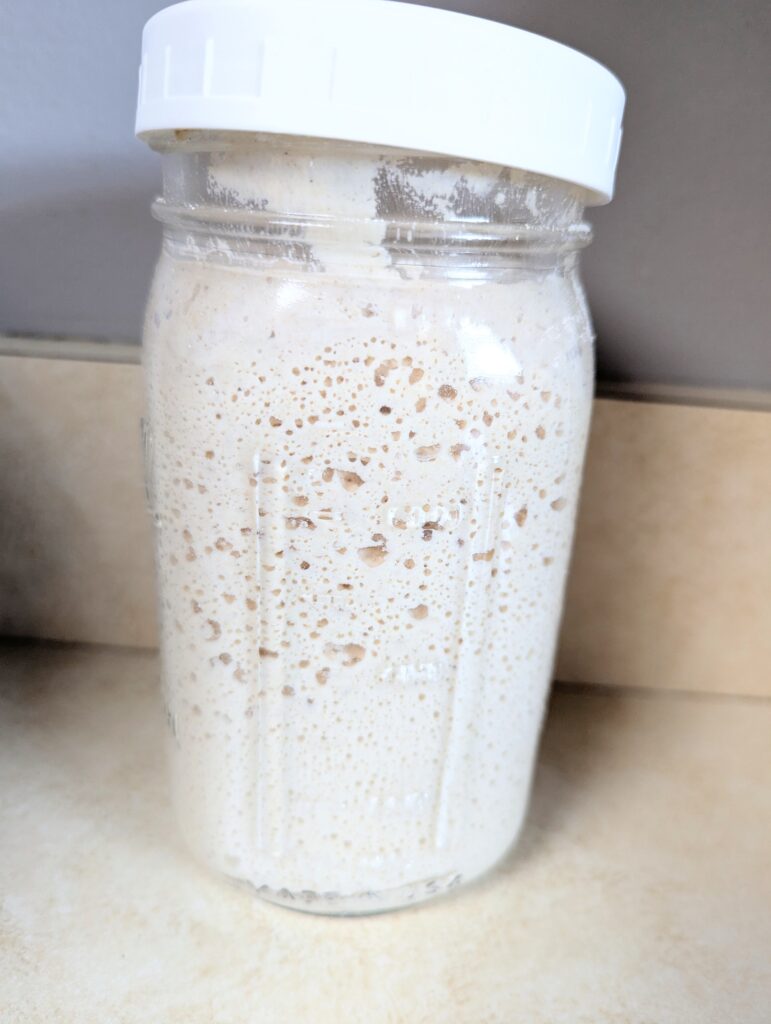
How do you feed your sourdough starter? This is assuming you have a starter or were given a starter. Now what? The starter needs to have 2 things: gluten free flour, like brown rice, white rice, millet, or sorghum AND filtered water. You will need to feed it equal parts gluten free flour and water. You want the consistency of the starter to be like a thick pancake batter. Feel free to tweak it a bit. Seems too thick, add more water. Seems too runny, add more flour.
How much do I feed it? I typically feed it as much as I am going to need in the recipe. So if my recipe calls for 1/2 cup of starter, I will feed it a 1/2 cup of gluten free flour and 1/2 cup of water. If you are going to use it for more recipes in the next day or 2, feed it more. Let it sit on the counter and then wait for it to get bubbly and rise in your jar. I use a quart mason jar with a loose lid. You want to let it get exposed to the air- no tight fitting lids.
What if I won’t use it for awhile? If you know you won’t be making anything with it for awhile, feed it some gluten free flour and water and then place it in the fridge with a tight fitting lid. It will keep in the fridge for weeks. I’ve been known to neglect mine for a month and it’s still fine. Just pour off any water that floats to the top and feed it some gluten free flour and water and leave it on the counter at room temperature to reactivate it.
What if it gets moldy? This can happen, especially if you forgot about it or left it on the counter too long without feeding it. While some would say it’s bad, it’s really not. It means that the natural symbiotic balance is out of whack. What to do: You really only need about 1 tsp of good starter to salvage your starter. Don’t stir it, but instead scrape off all of the mold and throw it in the trash. Go to the very bottom of your jar and get about 1 tsp (or more if you have it) of good starter without any mold on it and put it in a fresh clean jar. This will be your new starter and feed it water and gluten free flour. If this new batch starts to mold right away, the balance may still be off and you may have to toss your starter and get a new one from a friend or try again.
Kefir to turbo start your GF starter? Yes, adding milk kefir can give your gluten free starter a turbo boost! I created my own GF starter in just a few days using my homemade milk kefir!! It was incredible! Milk kefir contains up to 62 strains of good bacteria and boy does it work! I only needed to use the milk kefir in the very beginning to get my starter active. I don’t use it anymore. so my starter is completely dairy free at this point. How to do it: Instead of adding all water to feed your starter, just add a bit of milk kefir too. There’s no exact science to it, but even just a couple feedings like this will help quickly activate your starter if you think you’ve killed it or are just trying to get it going for the first time.
How to use it in a recipe? If the recipe calls for 1/2 cup of active starter, just stir your starter up and dump out 1/2 cup into your recipe. Then follow your recipe as instructed.
I hope you found this guide helpful! Here are some sourdough recipes to get your started!!